
Managing Complex Personalities in Consultations: Keys to Calm Communication (Interview with Dr. Mathias Campins)
As healthcare professionals, we regularly encounter a diversity of personalities among our patients. Some interactions can prove more delicate than others, particularly with emotionally unstable, dissatisfied, demanding, or even aggressive patients. How can we maintain a professional framework while ensuring human and effective care? This article explores essential strategies for managing these situations.
Managing Complex Personalities in Consultations: Keys to Calm Communication (Interview with Dr. Mathias Campins)
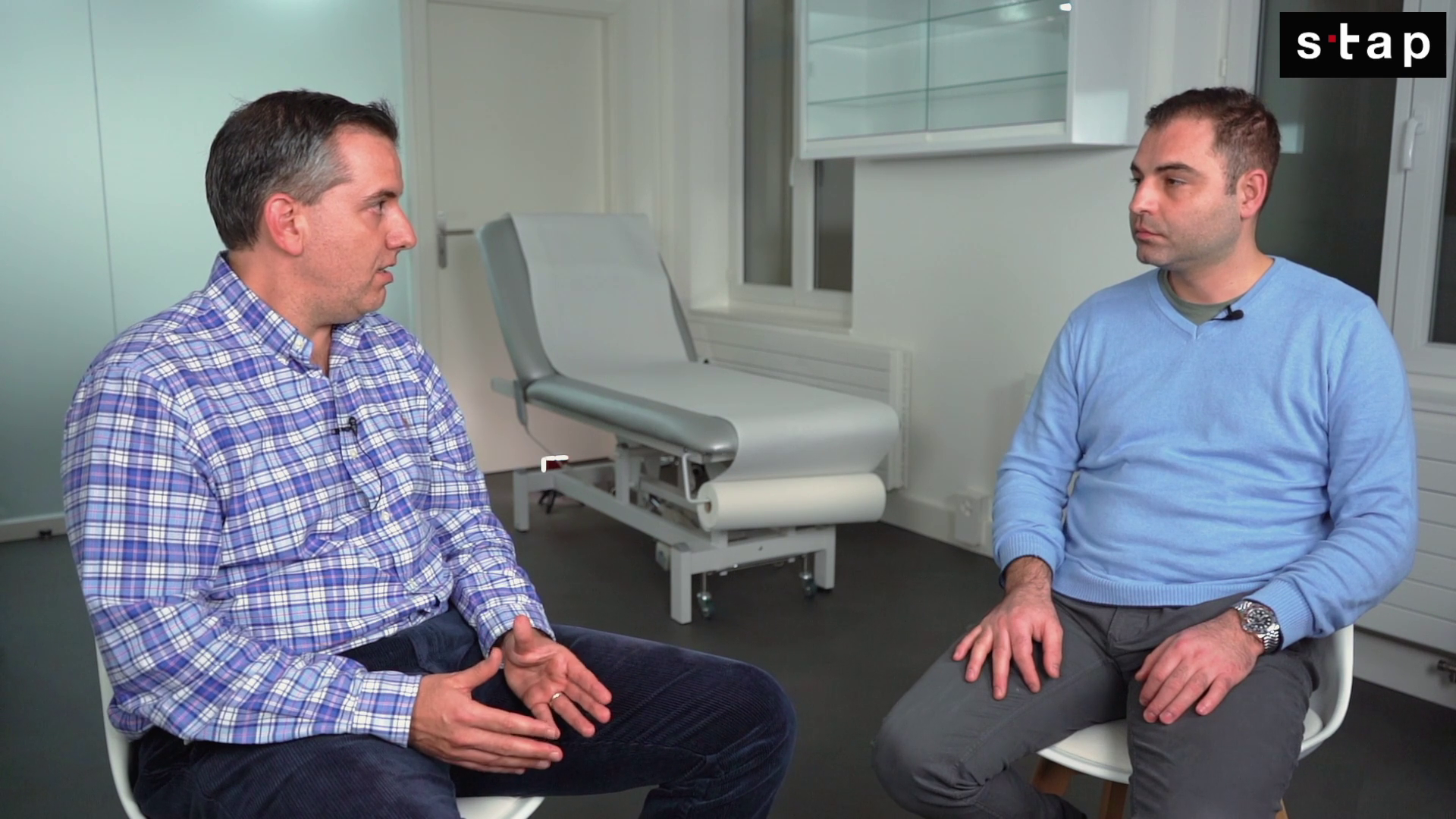
Excerpt from the STAP course video – Chapter 2: The Surgeon’s Social Skills
2.6 How to Manage a Consultation and the Different Patient Personality Types
Understanding and Managing Emotionally Unstable (Borderline) Personalities
Individuals with so-called "borderline" personalities perceive only extremes. For them, you are either the best therapist or the worst, constantly oscillating between "very good" and "very bad" poles. This is referred to as "splitting" and "projective identification," meaning they will transmit their own distress to you. For instance, a patient might thank you for a successful operation but insist on the persistence of their pain, thereby transmitting negative energy to you. This can leave you with an unpleasant feeling, even if the medical objectives have been successfully achieved.
The key to managing this type of personality is to establish a clear and factual framework immediately. It is crucial to return to objective facts: "Excuse me, Madam, your surgery was this ligament reconstruction. It was performed successfully. You underwent rehabilitation, you regained 88% of mobility". This "reframing" is somewhat similar to what is used for narcissistic personalities, but with a major difference: after effective reframing, the emotionally unstable or borderline patient can swing from one extreme to the other, becoming more receptive. These personalities can often be identified through their very unstable emotional life, a history of psychoactive substance use, or past behavioral issues.
Dealing with Dissatisfied or Aggressive Patients: The Art of Listening and Detachment
Whether facing a dissatisfied, demanding, or potentially threatening patient, or one exhibiting a certain aggressiveness, our duty as professionals is primarily to listen. The first golden rule is above all not to be emotionally reactive. Allow the person to "vent" without interruption or reaction. If the patient cannot express their anger, it risks intensifying, as they will feel that they are not being given space for emotional expression and will feel hurt.
One must learn to "take the hits like a boxer". This period of expression allows the patient to discharge their frustration. Often, once the anger has been expressed, a sense of guilt can set in for the patient, making them more willing to hear the truth and the messages you wish to convey. If the patient has spoken for half an hour, you can then allow yourself to speak for five minutes, because they are more tolerant after having gotten carried away. It is a matter of controlling emotional reactivity.
The principle is simple: two ears and one mouth, meaning listening twice as much as you speak. In a crisis situation, it is crucial to let the other person express themselves and not enter into emotional "mirroring," at the risk of creating a conflict.
Mindfulness: A Valuable Tool for Professionals
To achieve this emotional non-reactivity, mindfulness (full awareness) is a fundamental concept. It involves taking a step back from the situation, becoming an observer of the situation, and creating distance from our own thoughts. If we are caught up in emotional reactivity, this distance cannot be established.
A concrete technique for practicing mindfulness in these moments is to rely on abdominal breathing. Although this can be difficult in stressful situations, abdominal breathing is essential for relaxation and life, contrasting with thoracic breathing, which is for survival. By working on this aspect, significant relaxation is achieved, because 90% of nerve endings are intestinal.
In conclusion, managing complex personalities or tense situations in consultations relies on active listening, setting clear and factual boundaries, controlling one's own emotional reactivity, and applying the principles of mindfulness. These approaches help transform potentially difficult interactions into more constructive and calm exchanges.
Hashtags
#ManagingDifficultPatients #BorderlinePersonalities #MedicalCommunication #Mindfulness #MentalHealth #PatientRelations #Medicine #EmotionalReactivity #MedicalConsultation #ActiveListening

 STAP Interviews-Testimonials
 Managing Complex Personalities in Consultations: Keys to Calm Communication (Interview with Dr. Mathias Campins)
 Choosing Your Primary Total Knee Arthroplasty Implant: Beyond Common Beliefs
 Comment choisir une prothèse totale de genou de première intention